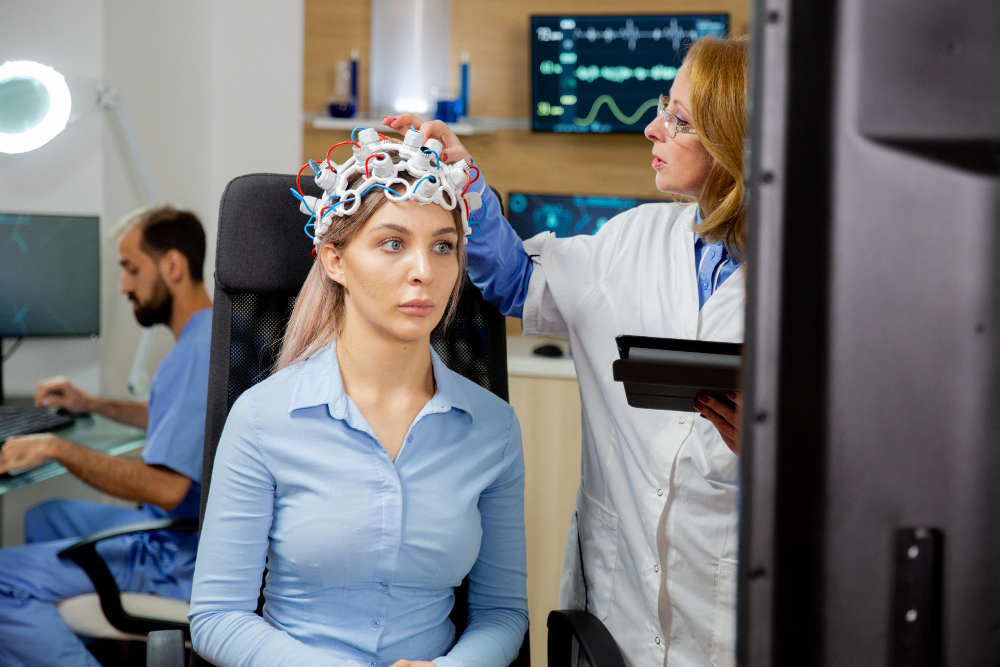
What is Deep Brain Stimulation (DBS)?
Deep Brain Stimulation (DBS) is a medical treatment for certain brain disorders. Doctors use it to help people with movement problems. For example, DBS is often used for Parkinson’s disease, essential tremor, and dystonia. In this treatment, a small device sends electrical signals to specific parts of the brain. These signals help control abnormal brain activity. According to the World Health Organization (WHO), DBS can improve quality of life for many patients. While it does not cure the disease, it can reduce symptoms and help people live better.
How DBS Works
DBS uses a device called a neurostimulator. This device is like a pacemaker for the brain. Surgeons place thin wires, called electrodes, into certain areas of the brain. Then, they connect these wires to the neurostimulator, which is placed under the skin in the chest. The device sends mild electrical pulses to the brain. As a result, these pulses help control movement and reduce symptoms. Doctors adjust the settings to fit each patient’s needs. Because the device can be turned on or off, it offers flexibility and safety.
Conditions Treated with DBS
Doctors use DBS to treat several neurological conditions. Most often, it helps people with:
For example, DBS for Parkinson’s disease can help reduce tremors, stiffness, and slow movement. Although it is not a cure, it can make daily life easier. If you have questions about your condition, talk to your doctor about neurological treatment options.
Benefits and Risks of DBS
DBS offers many benefits for people with certain brain disorders. Some of the main benefits include:
However, like any surgery, DBS has risks. Some possible risks of DBS surgery include:
Most side effects are rare or mild. Still, it is important to discuss DBS surgery risks with your doctor before deciding. The Centers for Disease Control and Prevention (CDC) and medical journals report that most people recover well after DBS.
The DBS Procedure: What to Expect
Before surgery, doctors do several tests to make sure DBS is right for you. On the day of the procedure, you will receive anesthesia to keep you comfortable. Surgeons place the electrodes in the brain using special scans for guidance. Next, they place the neurostimulator under the skin in your chest. The entire surgery usually takes several hours. After surgery, doctors test the device and adjust the settings. Because the device can be programmed, you may need several visits to find the best settings for you.
Recovery and Aftercare
Most people stay in the hospital for one or two days after DBS surgery. Recovery time varies, but many people return to normal activities within a few weeks. During recovery, you may feel tired or have mild pain at the surgery sites. Your doctor will give you instructions for caring for the incisions. In addition, you will have follow-up visits to adjust the device settings. With proper care, the device can last for several years. If you notice any problems, contact your doctor right away.
Frequently Asked Questions
Prevention and Lifestyle Tips
While DBS helps manage symptoms, it is important to maintain a healthy lifestyle. For example, you can:
In addition, keep all follow-up appointments to ensure your DBS device works well. If you have any concerns, talk to your healthcare team right away.
Consult Dr. Pravallika Dutta, a neurologist or neurosurgeon, for personalized advice on Deep Brain Stimulation (DBS).